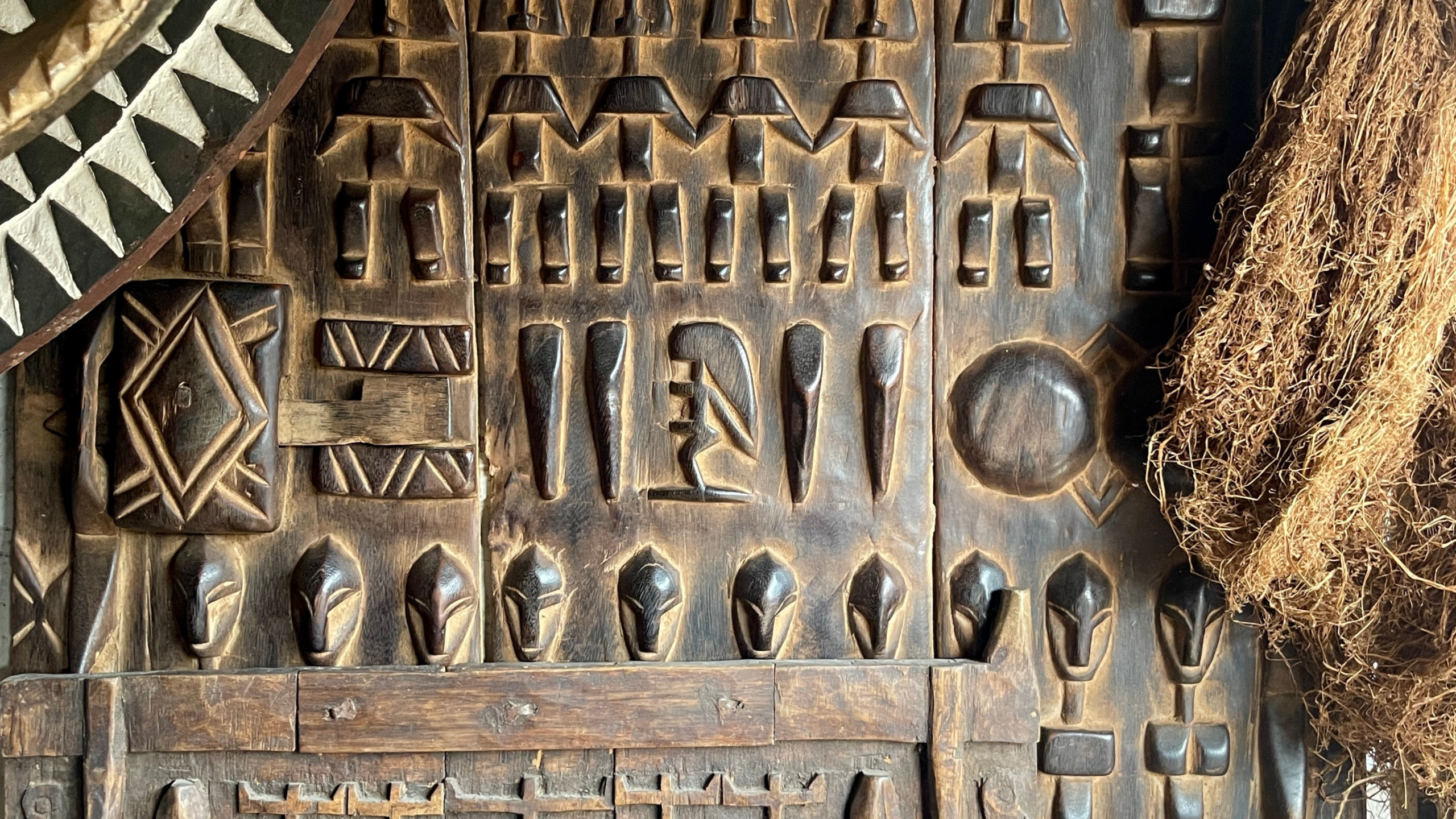
Lekki Art and Crafts Market, also known as Oba Elegushi International Market, is exactly what the name suggests. It’s a physical marketplace for all things related to Nigerian art.
Items You Can Buy at Lekki Art Market:
- Local fabrics – especially Àdìrẹ, Aṣọ-Òkè, Fulani cloth etc.
- Traditional clothing
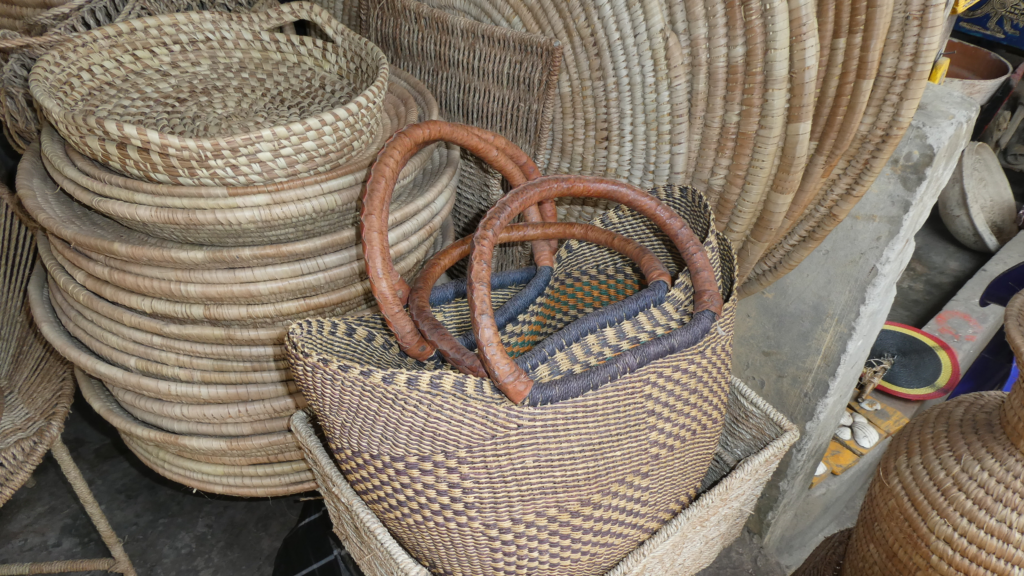
- Fashion Accessories (Bags, Wallets, Sandals, Traditional Fans etc.)
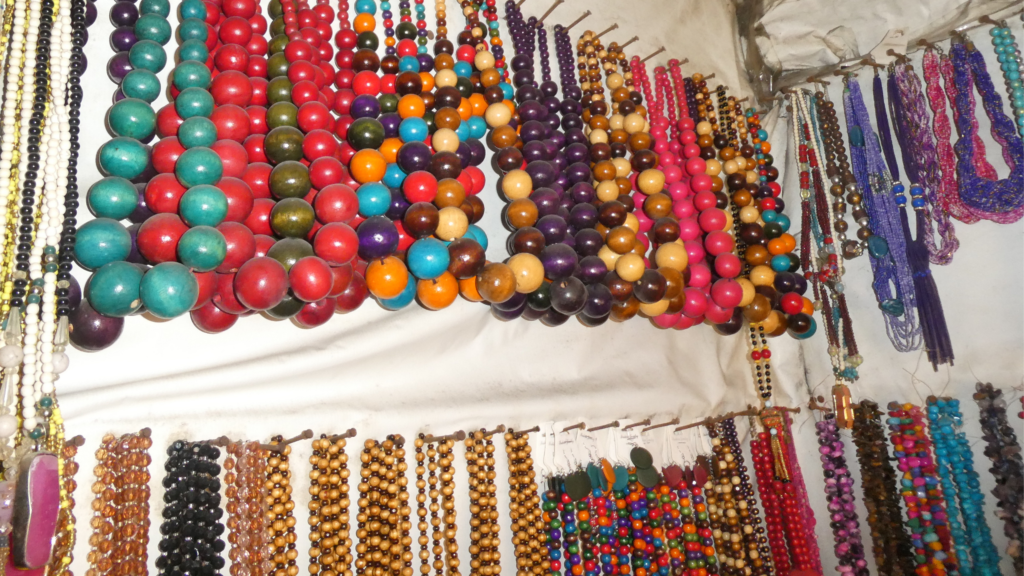
- Gemstone Jewellery
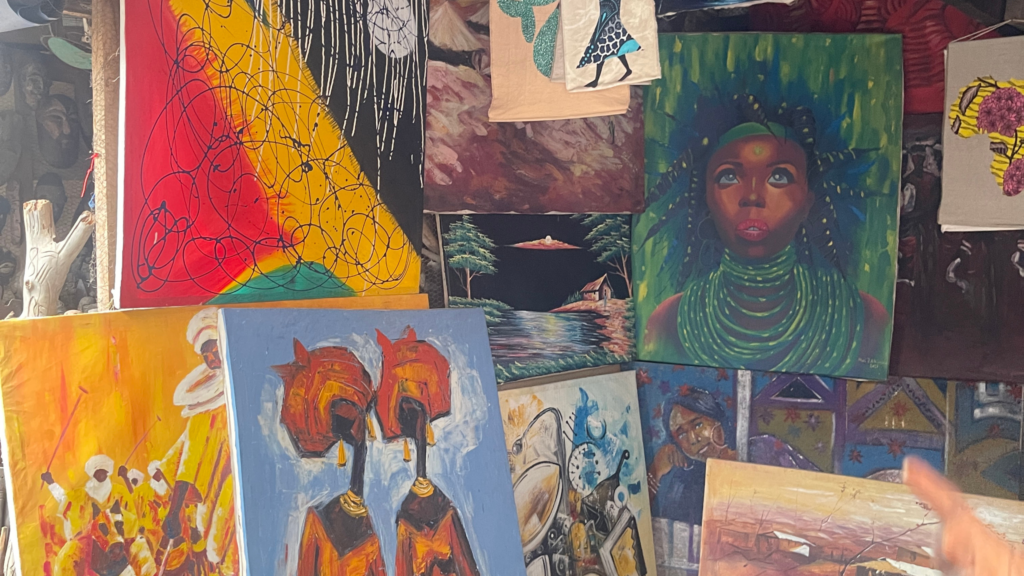
- Paintings
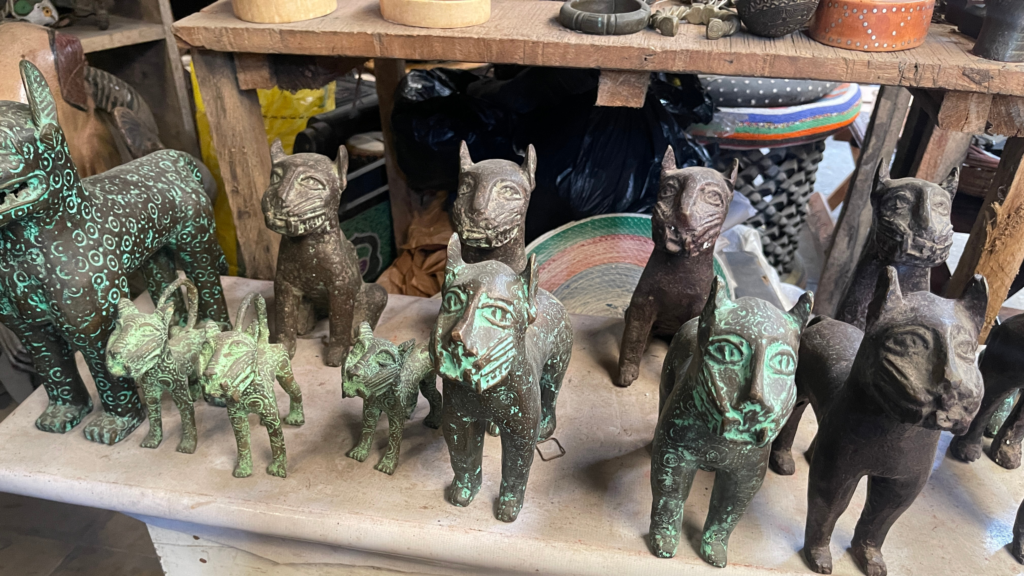
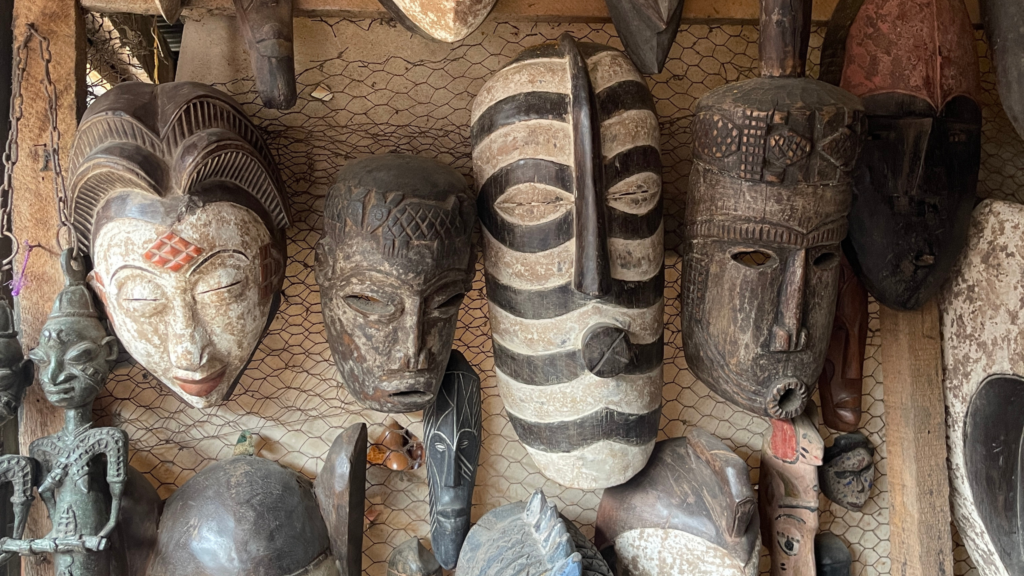
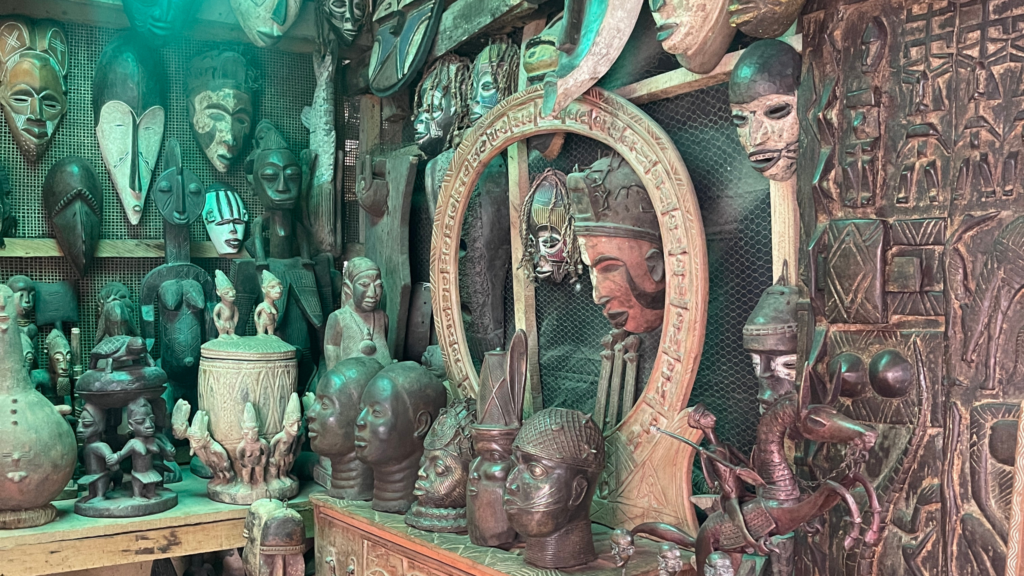
- Sculptures
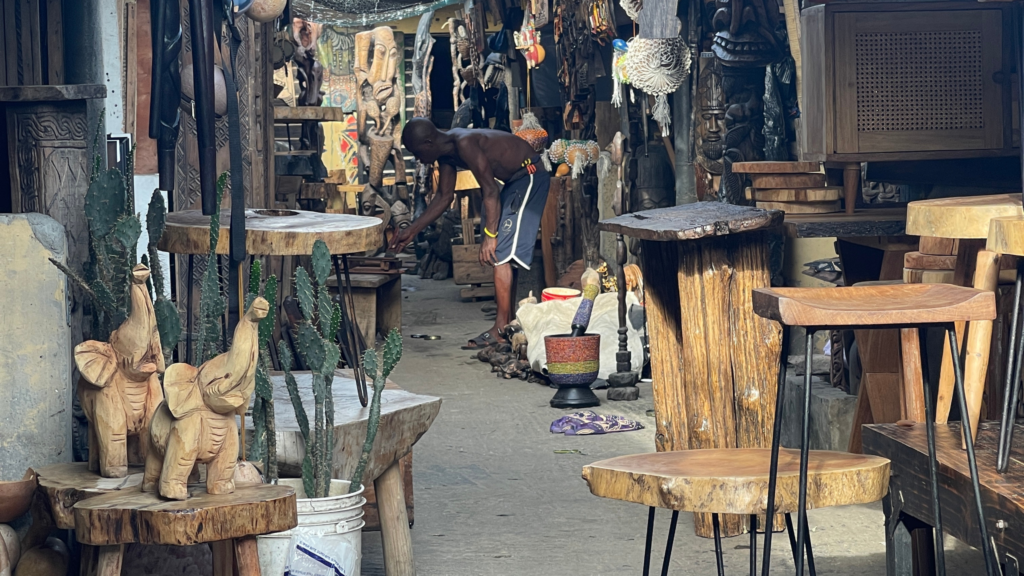
- Hand-carved Furniture (Bookcases, Beds, Mirrors, Chairs, etc.)
- Home décor
- Craft Kitchenware
- African Doors
- Glassware
- Groceries (including raw foods and provisions)
- Vintage Vinyl records
- Vintage CDs
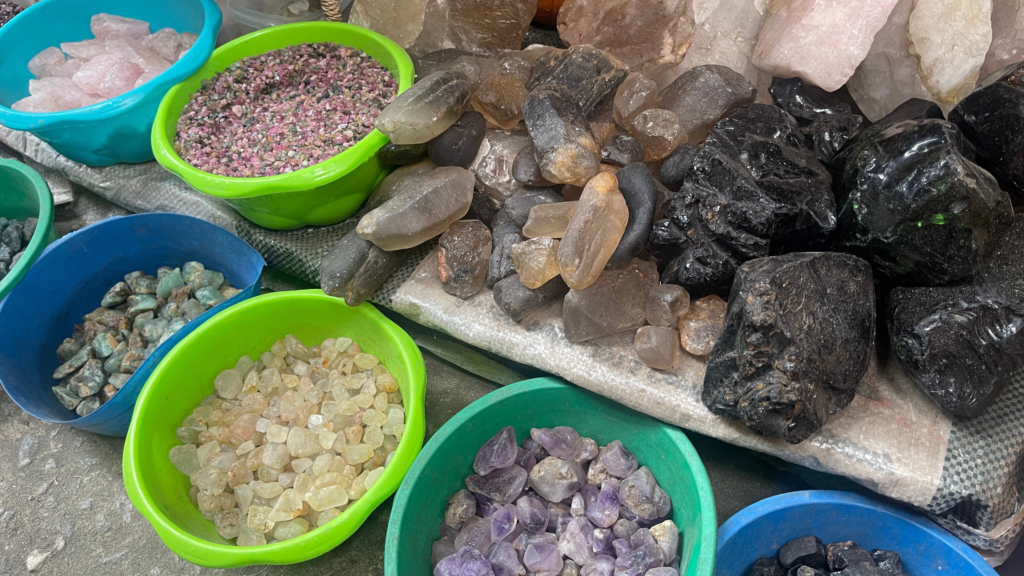
- Gemstones
- Souvenirs etc.
Things to Know Before You Visit
Before you venture off into the market to find your next piece of West African heritage, there are a few things you should know:
- There are No ATMs
There are no ATMs nearby either, so if you intend to pay with cash, grab some before you get on the Lekki-Epe expressway. You can pay for items with cash or by local bank transfer. There are POS machines, so you might be able to withdraw cash from POS vendors for a fee, but beware of POS scams and protect your banking information.
- Parking Costs ₦500*
Like most markets in Lagos, the parking fee is collected by a man who will approach you within the car park. There are no signs. Usually, you’ll pay after you park your car and before you enter the market. Make sure you collect a receipt and hold on to it!
*Parking costs ₦1,000 in 2026.
- Multiple Entrances
There are multiple routes into the market. The easiest way to get to Lekki Art Market is via Silverbird Road, off the Lekki-Epe expressway. Take the first right onto Elegushi Market Road, and you’ll be there in no time.
It’s an upcoming area, so the roads are a work in progress. Some streets are quite deserted and feel less safe. Beware of alternative route suggestions if you’re using Google Maps.
If you try to go via Lekki Beach Road (also off Lekki-Epe expressway), you’ll end up in the middle of Jakande Market waiting 25 minutes for annoyed market women to move their goods from the road, whilst you squeeze your car through a crowd of pedestrians – speaking from personal experience.
- The Market Closes at 5 pm
Lekki Arts Market opens from 9 am to 5 pm daily. The best time to arrive is between 10 am and 4 pm, when most stalls are likely to be open. The vendors stop selling at 5 pm sharp.
9 Tips to Help You Make the Most Out of Your Next Visit
Whether you’re a novice or you’ve been several times, here are tips that can help you make the most out of your Lekki Art Market experience.
- Do your research
Nigeria is a melting pot of culture and ethnic diversity, and Lekki Art Market reflects that 100%. You can find art and crafts from all over the country and beyond. What type of products are you looking for? What materials are you most interested in buying?
If you’re not knowledgeable about the items you want to buy, vendors will embellish their product descriptions, and you might get home and realise that the ‘natural stone’ bracelet you paid for is actually made of plastic – again, speaking from experience.
The best strategy is to research the type of products you’re interested in buying beforehand, so you can discern higher quality items within the market. There really are some very high-quality gems in this place. Make sure you go prepared, so you get the best value for your money.
- Don’t be afraid to bargain
Price tags do not exist in Lekki Art Market. To know how much something costs, you’ll need to ask a vendor, who will then likely decide a price based on their impression of you.
This isn’t uncommon at all. You’re going to need to build some camaraderie with sellers if you want to get the best prices. A little sweet talk goes a long way.
If you find something you like, but don’t like the sound of the price, don’t be shy about haggling. It’s all part of Lekki Art Market’s charm!
- Check the Weather
Lagos essentially has two types of weather, too sunny and too rainy. Arriving in the morning helps beat the heat. Take sun protection, but if you forget, you can buy beautiful fans and woven hats inside the market for affordable prices. There’s also a food section at the back of the market, so if you do visit when it’s scorching, make sure to buy a cold drink to stave off the heat and keep hydrated!
Try to avoid Lekki Art Market when it’s raining because poor drainage is an issue within the market and its surrounding neighbourhood. Elegushi Road is in desperate need of maintenance, and when it rains, it’s almost impossible to get past without an SUV. Something to keep in mind for your next trip.
- “Looking is Free”, So be Prepared to Browse
It’s usually considered rude to waste a seller’s time browsing their store if you don’t intend on buying anything, so I was incredibly surprised to visit Lekki Art Market and learn the phrase “looking is free.”
Vendors will typically insist that you come into their stalls to browse their products and even take pictures. They are happy to show you product after product because they understand that it usually takes a while to spot that one art piece that captures your heart.
Try not to fall for the first thing you see. A lot of stalls sell similar things so you might find something else you like even better, or you might find a similar item at a lower price. Give yourself enough time to really look around.
- Don’t be shy to say no
This might sound very obvious, but it can be hard to say no under pressure. Vendors in this market don’t mind you taking ages to browse their stalls and will lure you into banter and conversation in the meantime, all the while weakening your resolve. It also doesn’t help that there are so many beautiful items on display within Lekki Art Market. However, don’t be shy about putting your foot down, and letting them know when you are not interested, even if you just happen to change your mind.
- Try before you buy!
Make sure you are 100% satisfied with whatever you are buying. Although there are many beautiful crafts here, there are also some traders who might try to pawn off old or damaged items to make a sale. For example, I had been sweet-talked into nearly buying a gorgeous bookcase when I checked the back and discovered it was full of termites. Be sure to check for wobbly tables, broken chair legs and poorly framed paintings before you hand over your money, and if you’re not satisfied with anything, be vocal about it!
- Take Pictures
There are thousands of options and unique finds within Lekki Art Market. Taking pictures helps you document what you find and can be useful if you ever want to buy something similar later on.
Also, if you’re looking for something specific, or a particular design, make sure you come armed with pictures otherwise, you’re going to spend forever trying to describe whatever you’re looking for to the stall owners. Opportunistic sellers will even try to pawn off ‘similar’ items to whatever you’re describing. Long story short – pictures always help.
- Custom Orders Are Welcome
Being an Art Market, most of the items for sale are produced locally. Many are even made within the market.
If you see something you like but have a more specific design in mind, you can talk to the vendors and place a custom order. This especially applies to furniture. Many of the vendors are artists and craftsmen themselves and have very creative design ideas, so you might be better off having something custom-made.
Just be wary of delivery times that seem too good to be true, and make sure to agree on all costs up front. It’s best to insist on a part-payment structure (e.g., 50% upfront and 50% on completion), so you don’t have someone run away with your money. Also, be sure to collect contact information – many of the vendors have business cards. This adds to the legitimacy of the transaction and is useful for following up with your order.
- Beware of Illegal Ivory Merchants
The global demand for ivory has claimed the lives of over 25 million African elephants in the last two centuries. The illegal ivory trade is not only responsible for the endangerment of Africa’s native wildlife, but has also been linked to the large-scale illegal exploitation of African people, terrorist activity, and corruption.
Thanks to the National Environmental Regulations introduced by the Nigerian Federal Government in 2011, there are strict laws prohibiting a wide range of transactions involving wildlife specimens – especially endangered animal products.
Lagos unfortunately happens to be a hotspot for the illegal ivory trade. A 2013 study by the British NGO, Traffic, found that the majority of ivory sold in Nigeria is imported from the Central African Republic and the Democratic Republic of Congo. In Nigeria, it is illegal to sell, purchase and be found in possession of imported wildlife specimens, including elephant ivory (part II, section 3).
This is something to keep in mind if you do encounter ivory merchants within the Lekki Art Market. The illegal ivory trade is a completely unethical practice that has devastating effects on both the local and international economy. Save yourself the risk of getting in trouble with both local and international authorities. Don’t buy illegal ivory!
In Conclusion
Lekki Art Market is a gem for people who are interested in owning African art and crafts. It has beautiful items at every price point, and it’s a safe, welcoming place to shop. We hope that spotlighting Africa’s art hubs will help more people recognise the value that spaces such as Lekki Art Market bring to our communities. Engaging with the African art community supports the livelihoods of the artists who work hard to shape and preserve African culture. We hope to see more patronage for the arts in Nigeria. Next time you visit, try out some of our tips to make the most out of your trip!
*This article was originally published in 2024 by www.notesonhope.com.