The community is the subject of CCA’s ongoing exhibition, not the art.
Ka ọ dị mgbe anyị g’afu ọzọ, which means “Until We Meet Again” in Igbo, confronts grief as something unresolvable, “a conversation without an end”.
Prompted by her own personal experience grappling with the complexities of grieving, curator Mary Osaretin Omoregie set out to create a safe space where the public can vulnerably confront its grief – an uncomfortable yet universal experience that’s often hidden.
In Omoregie’s words, Ka ọ dị mgbe anyi g’afu ozo critically explores “how grief and mental health are embodied, expressed, and silenced within different sociocultural systems. It interrogates the idea of grief not just as a personal act, but as a performative negotiation of culture, identity, and language.”
Ka ọ dị mgbe anyị g’afu ọzọ kicked off on August 15th with a pre-programme screening of ‘Back on Home Soil’, a 2023 film by Ofem Ubi. In it, the multidisciplinary poet returns to his birthplace, Ikom, Cross River, in remembrance of his late grandmother. There, Ubi explores grief and memory by engaging family archives and his grandmother’s community. After the screening, attendees participated in Ubi’s reflective writing exercise, ‘Grief: A Questionnaire’, which culminated in an interactive installation presented alongside the main exhibition.
Walking Through the Exhibition
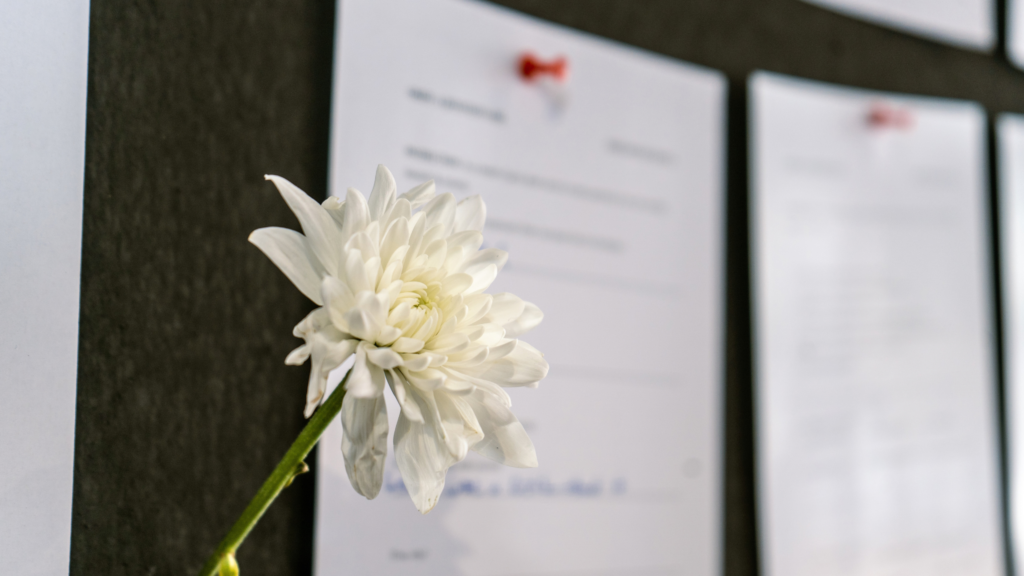
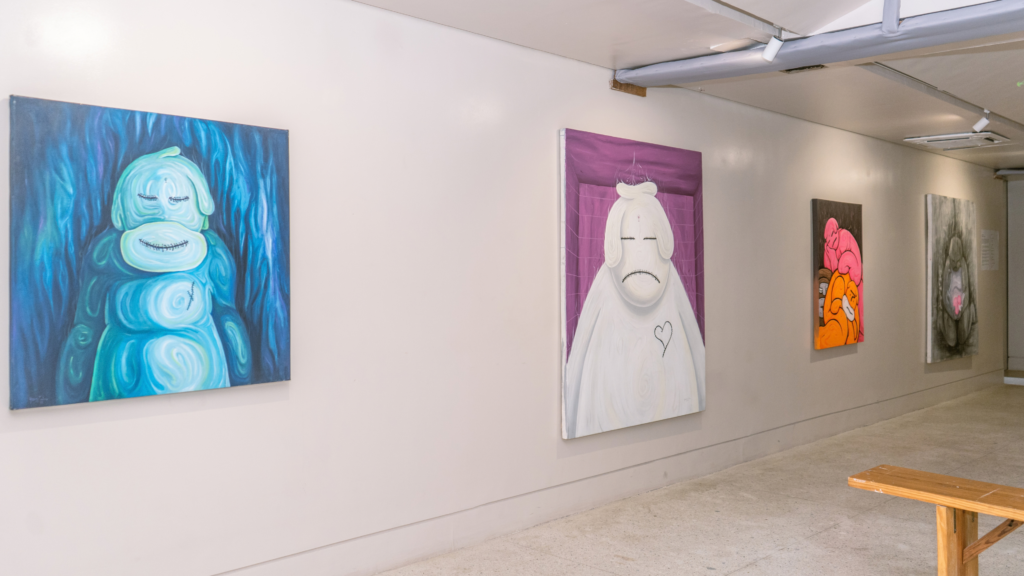
Ka ọ dị mgbe anyi g’afu ozo officially opened on 30th August, World Grief Day. Upon entry, viewers are greeted with a torii gate, a traditional Japanese archway that typically marks the boundary between the human world and the sacred spiritual space of a Shinto shrine. Here, it introduces Yusuff Aina’s ‘Voiniyan_The Journey’, a body of work that follows Aina’s Eniyan – “person” in Yoruba – through emotional and spiritual spaces shaped by grief. Aina’s torii gate features a caged, plexiglass Eniyan encircled by live burial flowers whose slow death over the course of the exhibition’s life serves as a metaphor for grieving. Through a series of paintings, we witness Aina’s Eniyan carrying loss, grieving in a private toilet, and searching for acceptance.
Tucked away on the ground floor is Daniel Oruwhone’s installation, ‘Rite of Passage’. A cast figure of the artist, draped in raw jute sacks and confined in a sensory cage, evokes raw feelings about the emotional endurance the bereaved are tasked with. The work draws on the weighty traditional burial rites that Oruwhone, a Delta native, experienced during his own father’s burial. Oruwhone’s installation and accompanying paintings – located on the first floor – continue his signature interrogation of the human body as it permanently passes through the psychological threshold, grief.
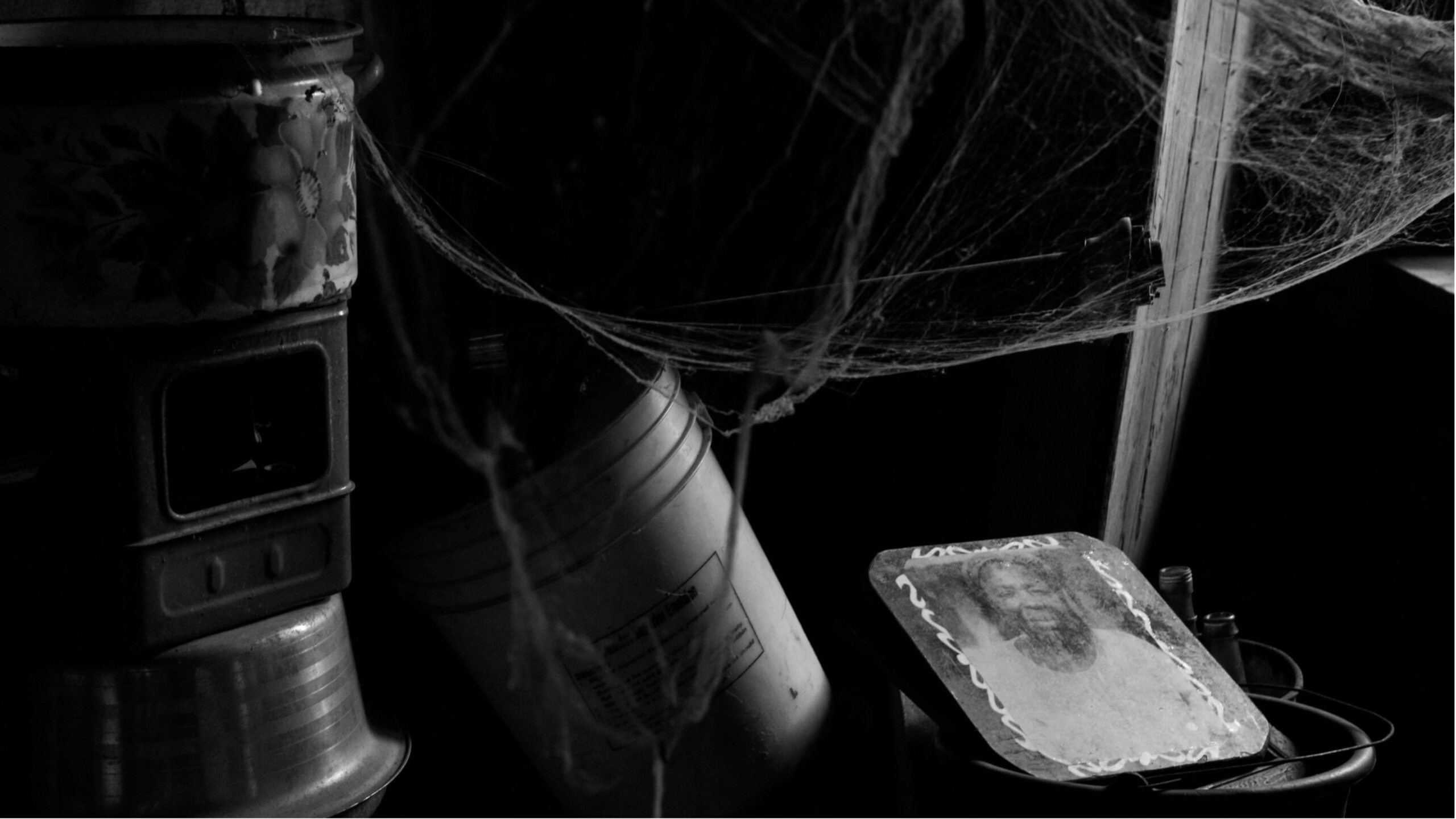
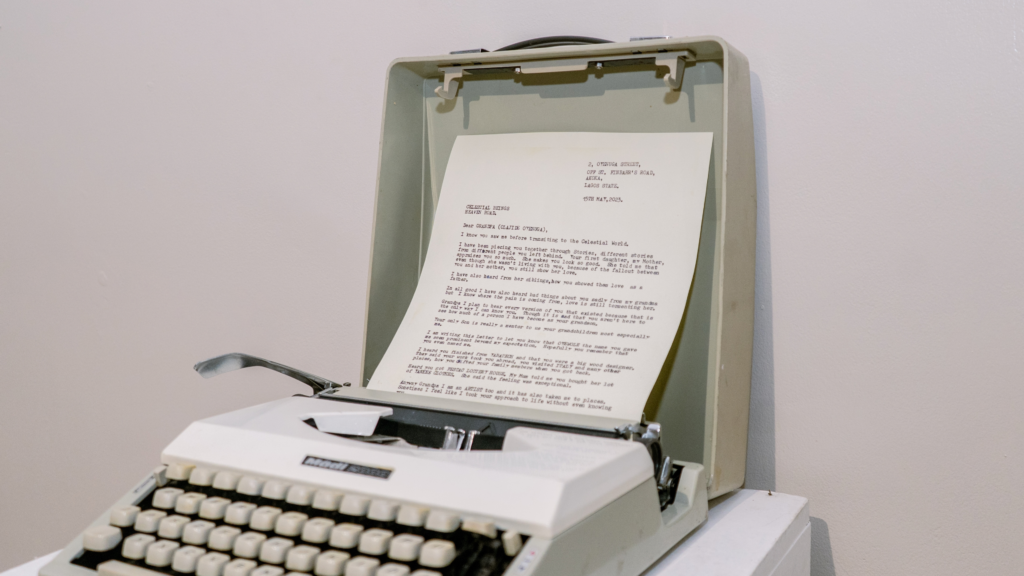
In a very different body of work titled ‘A Face I Arrived Too Late For’, Oyewole Lawal attempts to connect with his late grandfather, whom he never met. Through a film, heartfelt letter, decaying garments, performance, a mirrored sculpture, and an obituary, Oyewole Lawal narrates a spirited attempt to bridge the insurmountable distance between the living and the departed.
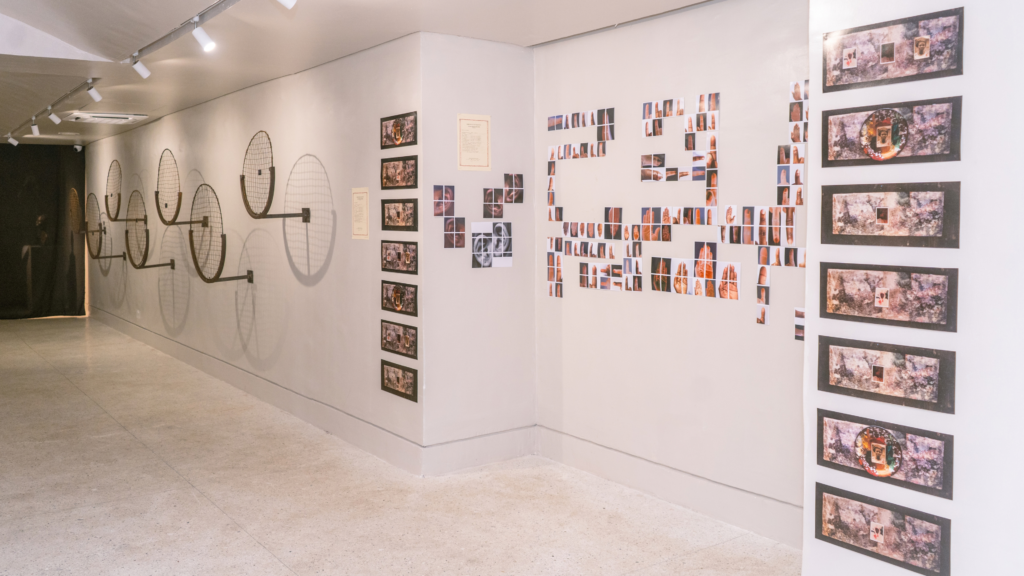
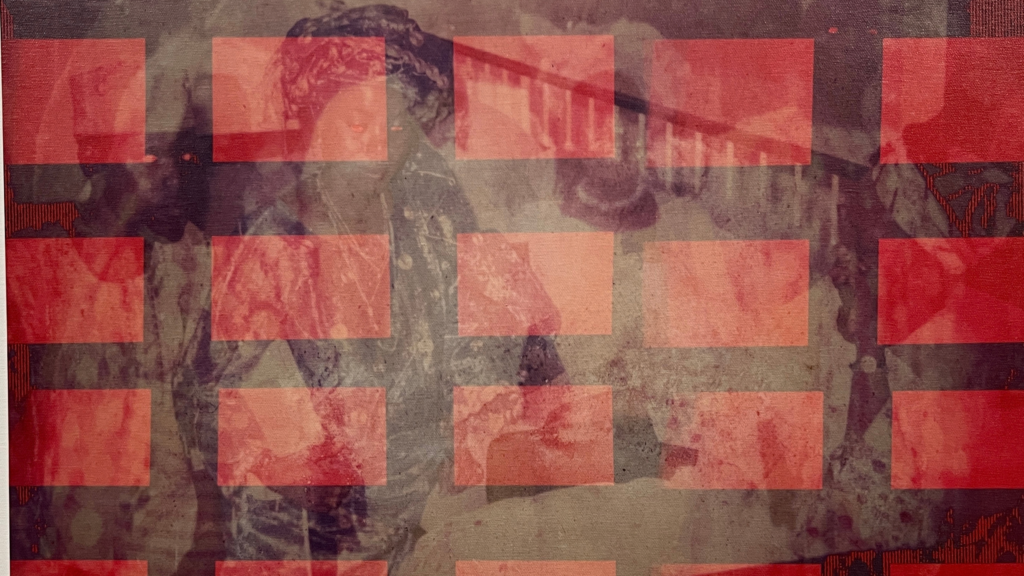
On the second floor, viewers are greeted by Ololade Lawal’s ‘Of Two Threes & A Soul’, where seven wired racks, photographs and printed text represent a personal, never-ending search for identity. Here, viewers also encounter Taesirat Yusuf’s series of multimedia images titled ‘Your Absence Echoes Louder’. Centred on the artist’s late father, the work reflects how loss transforms physical spaces and “the ways we continue to encounter the dead through what they leave behind”. Taesirat Yusuf experiments with double exposure, layering photographs and family memories to produce striking images where the past and present overlap.
In a less conventional take on grief, Lovelyn Tijesunimi-Israel processes the sudden death of a friendship through ‘Drawn Apart: Grieving the Living’. As a person living with ADHD and Rejection Sensitive Dysphoria (RSD), Tijesunimi-Israel presents her amplified experience of loss through ink drawings on watercolour paper. Viewers observe various depictions of the Takotsubo, a traditional Japanese octopus trap that is often likened to the result of stress cardiomyopathy – a medical term popularly known as Broken Heart Syndrome.
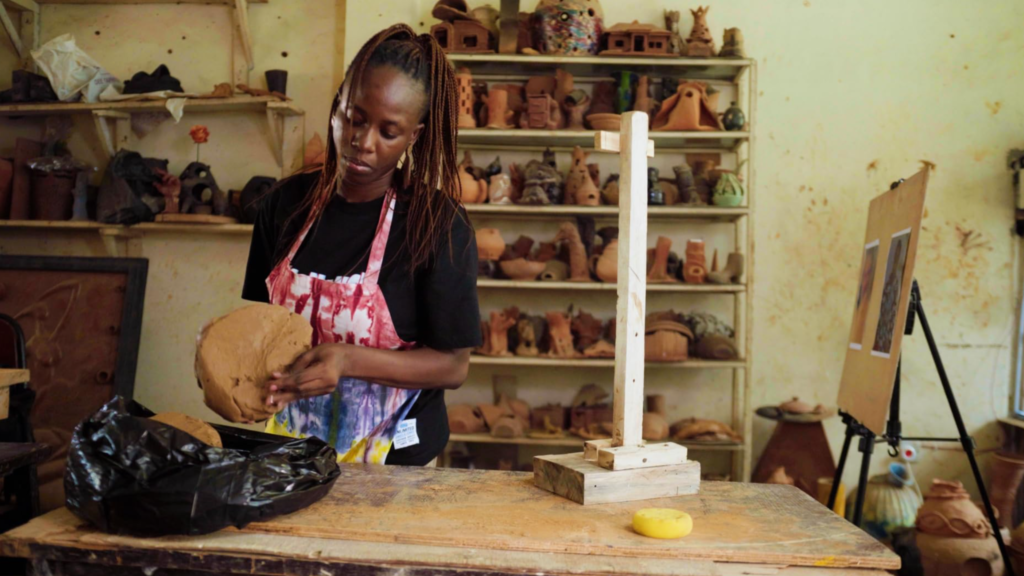
The rear space is reserved for ‘Mi Tazi‘, meaning “I Remember” in Ham, by Blessing Bulus. This ongoing body of work recounts Bulus’ journey reconnecting with her Nok ancestry since her father’s passing. Bulus shares her story through photography, sculpture, and her award-winning film ‘Mi Tazi (I Remember)‘ (2026), which won Best Short Documentary – International at the Toronto International Nollywood Film Festival (TINFF) in September 2026.
Ka ọ dị mgbe anyị g’afu ọzọ runs until 17th October 2026.
Key Exhibition Dates
15th August – Screening of ‘Back on Home Soil’ (2023) by Ofem Ubi
30th August – Public Exhibition Opening
30th August – Free Counselling with Rose of Sharon Listening & Support Centre (until 17th October)
19th September – Artist Talk moderated by Ude Ugo Anna
1st October – The Psychologist Date: ‘The Boxed Emotions’
About CCA,Lagos
The Centre for Contemporary Art, Lagos (CCA,Lagos) is an independent non-profit making visual art organisation founded in December 2007 by Bisi Silva (1962 – 2019) to provide a platform for the development, presentation, and discussion of contemporary visual art and culture. The centre seeks to create new audiences and prioritise media such as photography, film and video, performance and installation art, which have been under-represented in Nigeria. One of our aims is to develop a programme that reflects the diversity of practice, ideas and approaches in contemporary visual art and culture by providing a public forum for the critical examination of ideas and cultural practices in the arts.